


Three cities, nine days of learning, and one shared mission: reshaping the future of media through gender-sensitive storytelling.
As part of the “Breaking the Moulds, Shaping the Future” project, Albanian Women in Audiovisual (AWA) brought together journalism students, local journalists, multimedia professionals, and emerging content creators for a series of intensive masterclasses designed to challenge gender stereotypes and strengthen more inclusive and responsible media production.
Held throughout March 2025, the programme spanned nine days and was delivered in a hybrid format, combining online learning with hands-on workshops in Shkodër, Durrës, and Tirana. While the project had originally planned to collaborate with the universities of Shkodër, Durrës, and Elbasan, the programme was adapted during the preparation phase after it became clear that the University of Elbasan had limited enrolment in journalism-related programmes. As a result, the third training cycle was successfully relocated to Tirana, ensuring broader participation and greater impact.
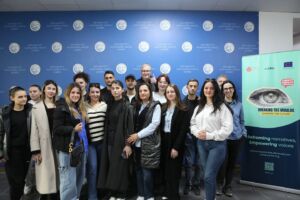
The call for applications, launched in February 2025, attracted strong interest from aspiring journalists and multimedia professionals across Albania. By the end of the programme, 129 participants had completed the masterclasses—34 in Shkodër, 46 in Durrës, and 49 in Tirana—demonstrating the growing demand for gender-sensitive media training among the country’s next generation of storytellers.
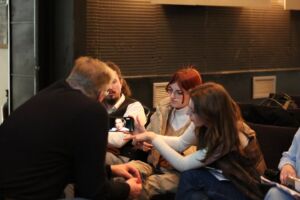
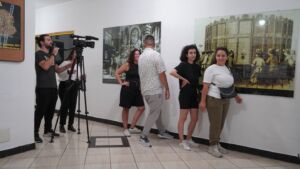
Each city followed the same dynamic learning format, beginning with an online introductory session before participants met for two days of intensive in-person workshops. Throughout the programme, participants explored gender representation in media, ethical journalism, storytelling as a tool for social change, and innovative digital and audiovisual formats capable of amplifying underrepresented voices.
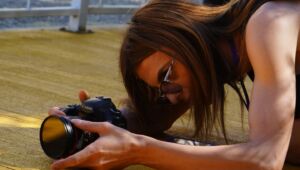
The masterclasses combined expert-led discussions with practical exercises, allowing participants to critically examine stereotypes in media content while developing their own multimedia projects addressing gender equality and social justice. By the end of the programme, participants had produced 16 original multimedia stories—4 in Shkodër, 5 in Durrës, and 7 in Tirana—which were presented and screened at the conclusion of each local training, showcasing fresh perspectives and creative approaches to inclusive storytelling.
The programme was led by a distinguished team of national and international experts, including Doruntina Basha, Timo Heinänen, Sabina Kodra, and Pandeli Çeço. Through a combination of theoretical sessions and practical workshops, participants gained valuable skills in storytelling, audiovisual production, and gender-sensitive reporting. Pandeli Çeço joined the programme through AWA’s national Roster of Experts, established in 2024 to bring experienced audiovisual professionals into the project’s capacity-building activities.
Beyond developing new skills, the masterclasses also created spaces for dialogue, collaboration, and professional networking among participants from different cities and backgrounds. They encouraged critical reflection on how media narratives shape public perceptions while empowering a new generation of journalists and content creators to produce stories that are more diverse, ethical, and representative.
The final session of the programme introduced participants to the second round of the project’s creative mini-grants, inviting them to build on the ideas developed during the training and transform them into fully-fledged audiovisual productions. The opportunity was also promoted through the project’s communication channels and social media platforms, ensuring that the momentum created during the masterclasses continued well beyond the training itself.
More than a series of workshops, the Masterclass programme became a platform where learning met creativity, and where future media professionals were equipped not only with technical skills but also with the confidence and perspective to tell stories capable of driving positive social change.
Masterclasses: Laying the Foundations for Gender-Sensitive Storytelling
The journey began in September 2024, when Albanian Women in Audiovisual (AWA) launched the first edition of its Masterclass programme in Tirana. Designed as an intensive four-day learning experience, the training brought together journalists, journalism students, and audiovisual professionals eager to strengthen their storytelling skills while promoting more inclusive and gender-sensitive media narratives.
Interest in the programme far exceeded expectations. Following an open call launched in July 2024, 185 applications were received from across Albania. After a competitive selection process, 60 participants were chosen to take part in the Masterclass, reflecting both the demand for specialised training and the growing interest in ethical and socially responsible journalism.
The programme was led by an international team of experts. Giovanni Robbiano introduced participants to narrative structure, script development and storytelling techniques; Doruntina Basha explored gender-sensitive journalism and inclusive storytelling, encouraging participants to critically reflect on how gender is represented in the media; while Timo Heinänen guided participants through the visual language of filmmaking, covering cinematography, lighting, framing and pre-production planning.
Rather than focusing solely on theory, the Masterclass placed practical learning at its core. Working collaboratively in teams, participants developed and produced eight short films addressing pressing social issues affecting women and girls in Albania, including sexual harassment, breast cancer awareness, abortion rights, sex-selective practices, discrimination against migrant women, and gender inequality. The programme concluded with public screenings and peer discussions, allowing participants to receive constructive feedback while exchanging ideas and experiences with fellow media professionals.
The Masterclass also marked the beginning of the project’s creative mini-grants programme. Participants were invited to transform the skills and concepts developed during the training into independent multimedia productions. From 13 project proposals, seven creative projects were selected for funding, enabling emerging filmmakers and journalists to continue producing gender-sensitive audiovisual content and bringing important social issues to wider audiences.
Strengthening Local Voices Through Capacity Building
Together, Masterclass I and Masterclass II trained 189 journalists, journalism students, multimedia professionals, and emerging content creators from across Albania. By combining international expertise with practical, hands-on learning, the programme created opportunities for participants to strengthen both their technical and editorial skills while developing a deeper understanding of gender-sensitive reporting and inclusive storytelling.
Particular attention was given to local journalists and young professionals in Shkodër, Durrës, and Tirana, providing access to high-quality training that is often concentrated in the capital. Beyond improving professional capacities, the Masterclasses fostered collaboration between media practitioners from different regions, encouraged the exchange of experiences, and built a growing community committed to producing more ethical, diverse, and representative media content.
The results were visible long before the end of the project. Participants produced 24 original multimedia works during the trainings alone—including eight short films in the first Masterclass and 16 multimedia stories in the second—while many continued their creative journey through the project’s mini-grants scheme. More importantly, the programme empowered a new generation of journalists and audiovisual professionals to challenge stereotypes, amplify underrepresented voices, and use storytelling as a tool for social change within their own communities.





 “Breaking the Moulds, Shaping the Future” is implemented by Albanian Women in Audiovisual (AWA) in partnership with SCiDEV and supported by the *European Union in Albania (@euinalbania).