


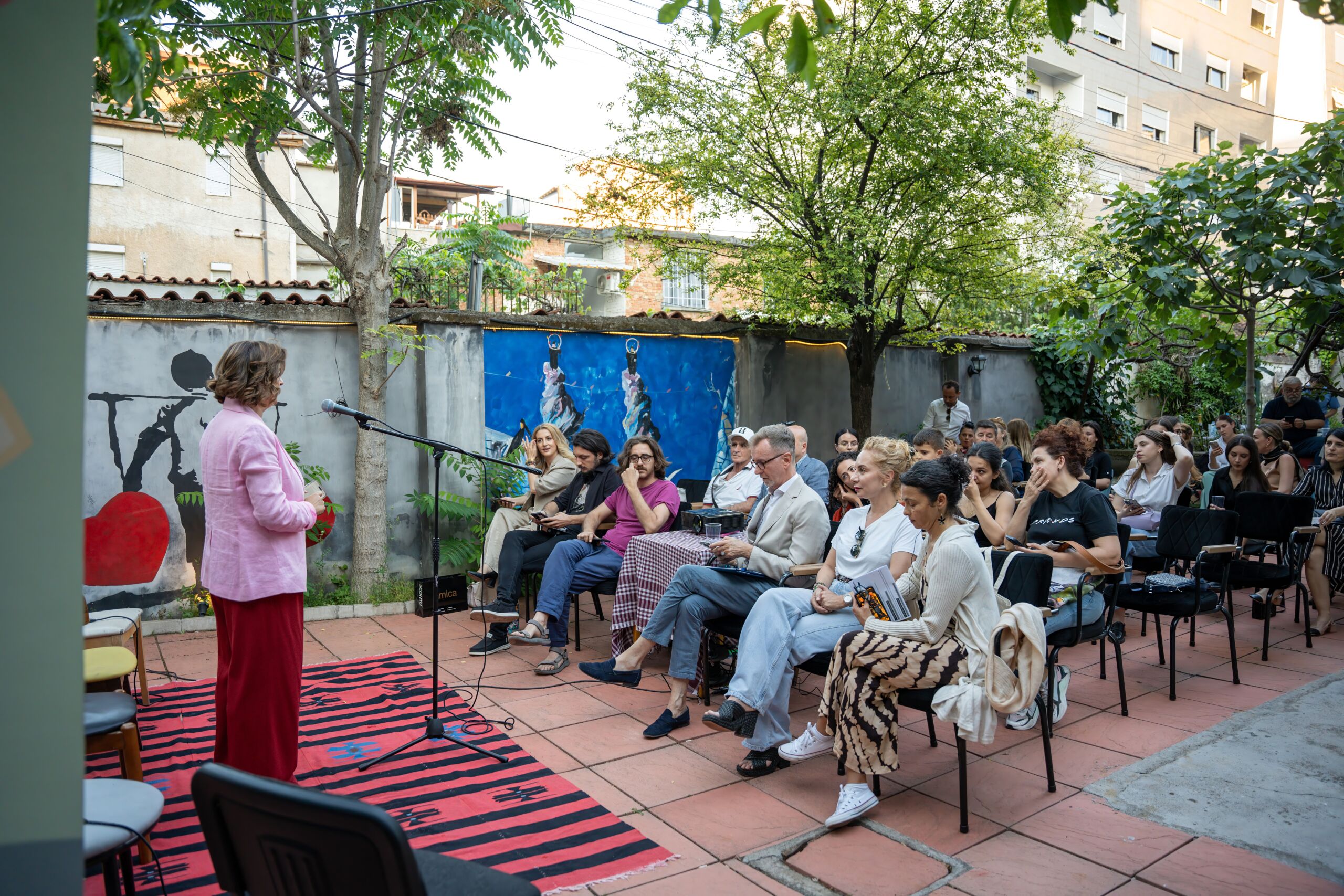
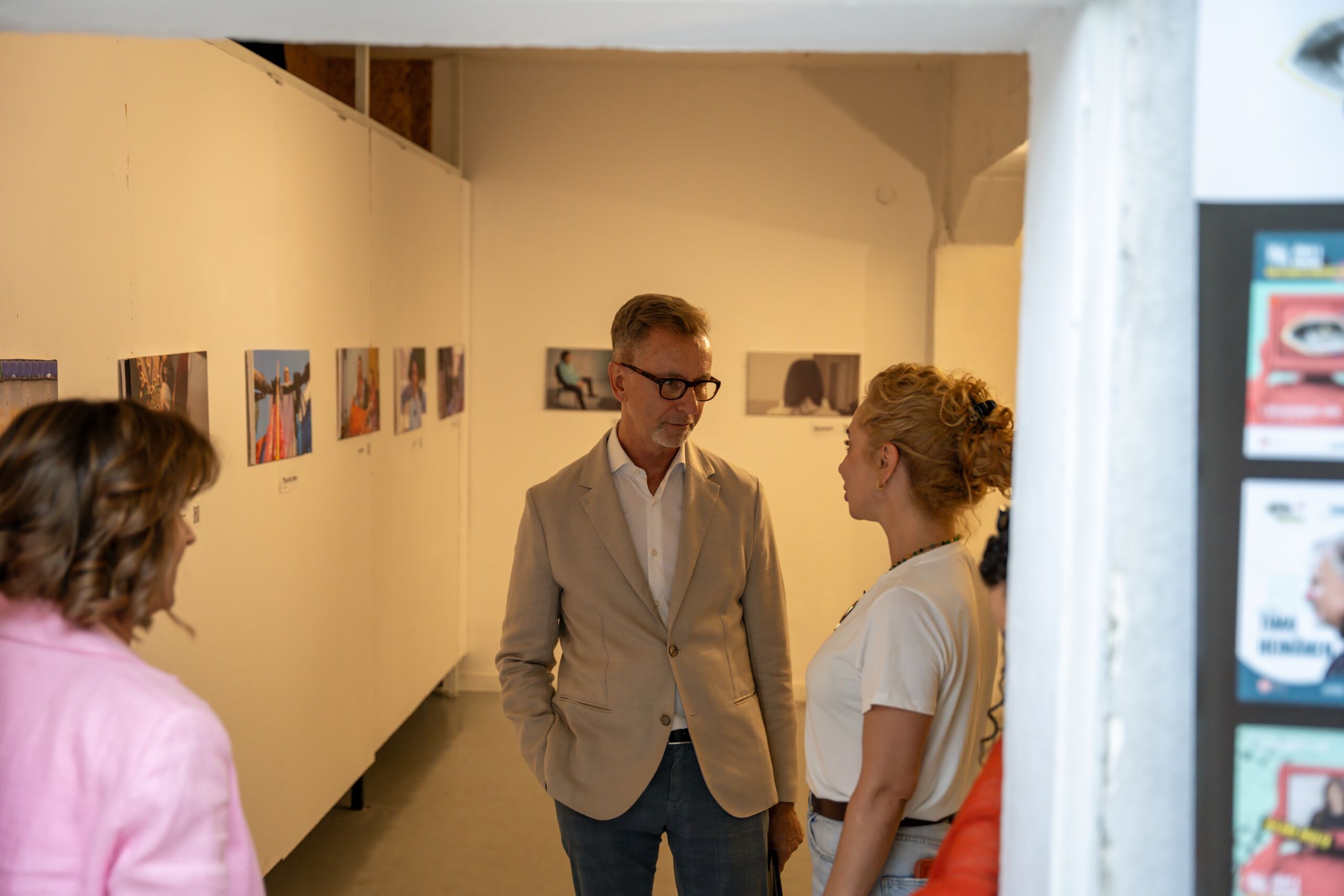
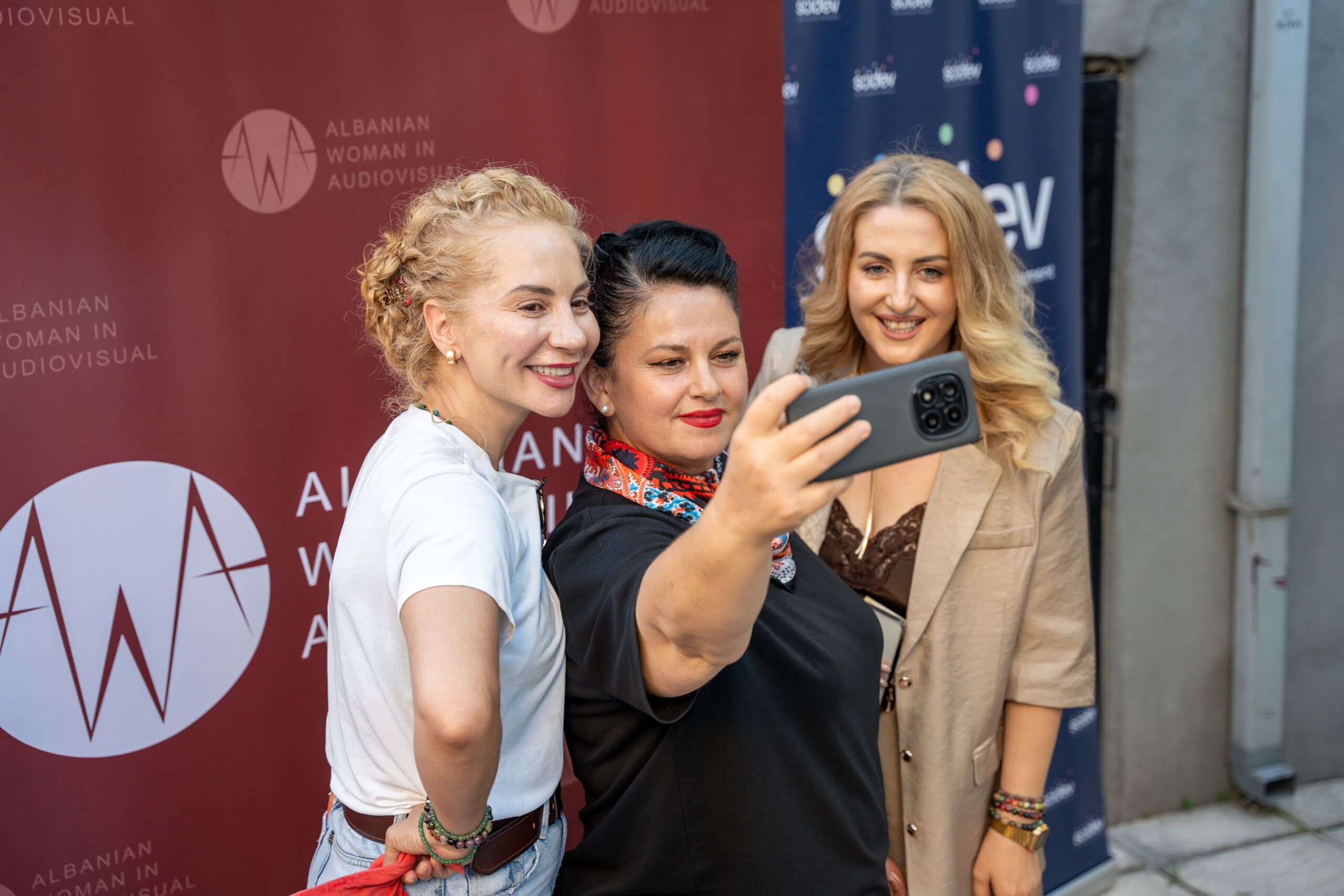
On 4 June, Albanian Women in Audiovisual (AWA), in partnership with SCiDEV, hosted the closing event of the project “Breaking the Moulds, Shaping the Future” at Tek Bunkeri in Tirana. The project is funded by the European Union in Albania.
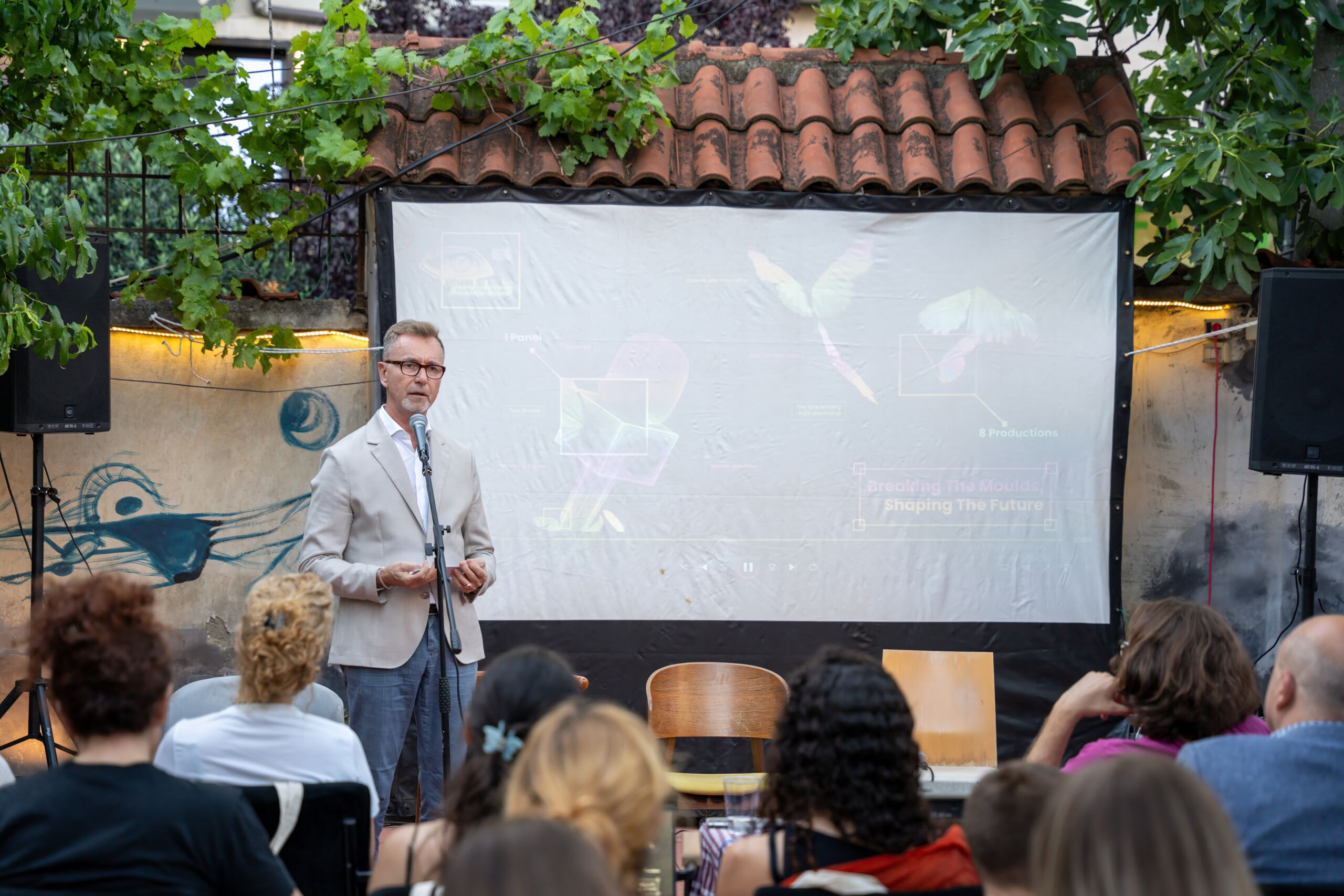
The event opened with welcoming remarks from the Ambassador of the European Union to Albania, Silvio Gonzato, and continued with a panel discussion on local journalism, with a particular focus on women journalists, their representation in the media, and gender equality. The second part of the evening featured the screening and presentation of films, mini-documentaries, podcasts, and artistic works produced by beneficiaries of the Mini-Grants Programme, one of the key support mechanisms of the “Breaking the Moulds, Shaping the Future” project.
The event took place at a significant moment for Albania, as public squares across several cities have recently been filled with protesters participating in the Flamingo Revolution. These developments have once again highlighted the important role played by local journalists and independent media, who have been covering the protests through alternative approaches and amplifying developments through social media and digital platforms.
In his opening remarks, Silvio Gonzato, Ambassador of the European Union to Albania, stressed the importance of independent and inclusive journalism as one of the fundamental pillars of European values.
“Through initiatives such as Breaking the Moulds, Shaping the Future, we support not only media professionals and organisations, but also the democratic values that underpin Albania’s European future,” Ambassador Gonzato stated.
“To the journalists: continue telling stories that matter, challenging stereotypes, and amplifying underrepresented voices. In doing so, you help build an informed and democratic society. We will continue to stand by your side,” he added.
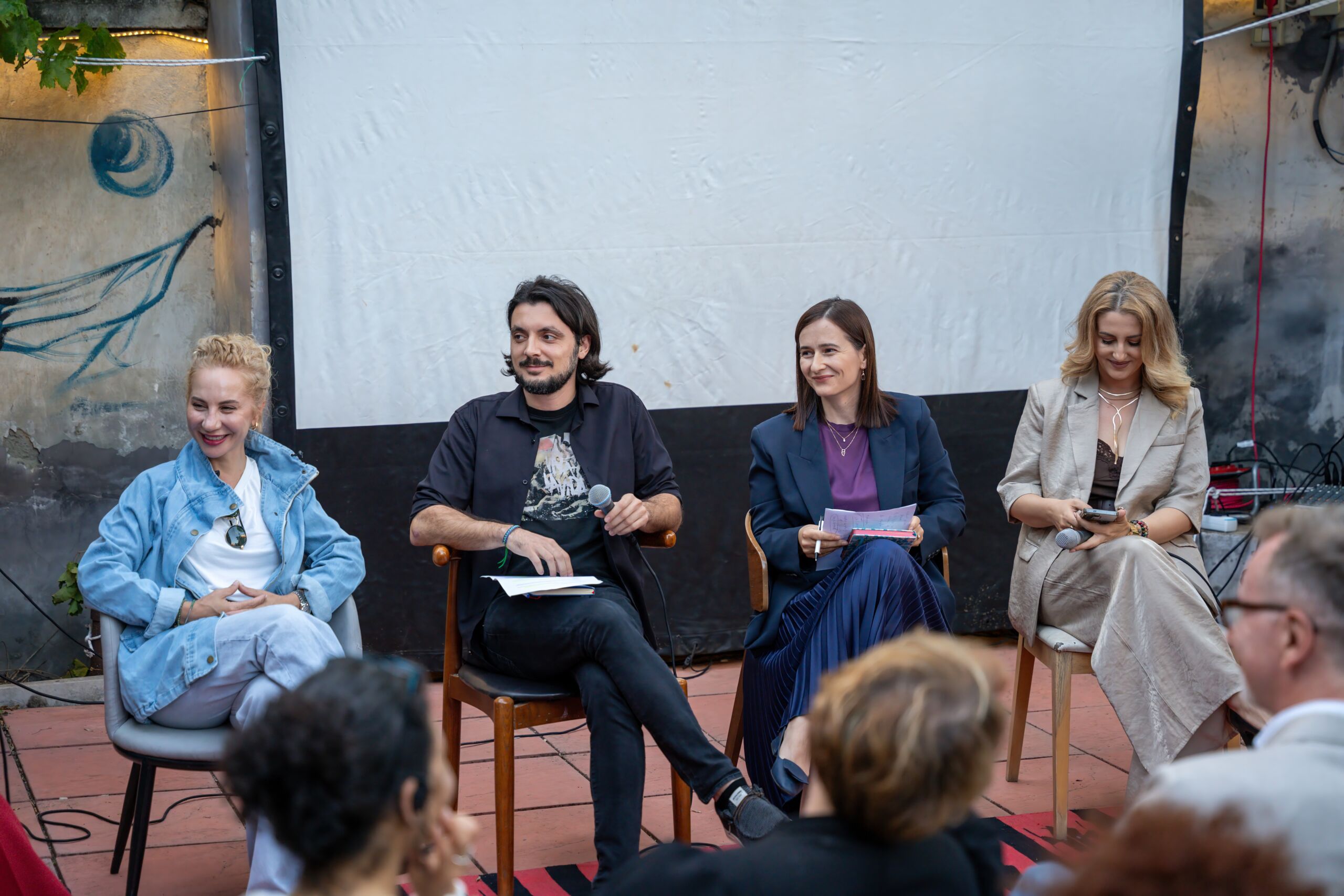
The Ambassador’s remarks were followed by the panel discussion “Strengthening Women’s Voices in Local Journalism and Media,” moderated by Valbona Sulçe. The panel brought together Sabina Kodra from AWA, Blerjana Bino from SCiDEV, Lorin Kadiu from Citizens.al, and local journalist Emi Kalaja from Shkodra.
During the discussion, Sabina Kodra emphasized the importance of recognising and valuing the work of local journalists, content creators, and storytellers who bring community stories into the public sphere. She underlined that their contribution should not be measured solely through the final products they create, but also through the dedication, time, trust-building, and persistence required to make these stories visible.
Blerjana Bino presented SCiDEV’s work on promoting gender equality, improving working conditions, and strengthening internal policies within Albanian media organisations. She also introduced the Gender Equality Policy Manual developed through the project as a practical tool for media institutions. According to Bino, the manual addresses a long-standing gap within Albania’s media sector, where many newsrooms still lack clear policies and effective mechanisms to ensure gender equality, protect labour rights, provide safe working environments, and prevent harassment and discrimination.
From the perspective of independent media, Lorin Kadiu highlighted the importance of reporting stories that often remain outside the focus of mainstream outlets. He noted that local and independent media are often much closer to communities and their realities, yet continue to operate under significant financial constraints and limited resources while carrying out an essential public-interest function.
Closing the panel, Emi Kalaja shared her experience as a local journalist working in the field, reflecting on the everyday challenges of reporting from communities. She stressed the importance of ensuring that women’s perspectives and voices are not treated as secondary in journalism, but are instead integrated into the way communities and social realities are represented and reported.
From Discussion to Celebration: Showcasing Nine Multimedia Projects
One of the highlights of the evening was the presentation of nine multimedia projects developed through the third cycle of the Mini-Grants Programme. These projects brought forward stories, perspectives, and realities related to gender equality, representation, community life, and broader social challenges.
Through a variety of formats, including documentaries, short films, podcasts, and artistic productions, the creators explored topics that often remain absent from mainstream public debate. Participants had the opportunity to watch Women Recyclers by Romina Sefa, She Tells Her Story by Emi Kalaja, and The Invisible Ones by Elira Kadriu, all of which explored women’s experiences and challenges in different social contexts.
The programme continued with Hajrije Dedej’s artistic work Album and Pulse, Ardit Alimemeti’s documentary What Is Missing from the Frame, Olsi Sherifi’s film Two Worlds, and Ilir Shyta’s documentary FemnArt. Participants also listened to the podcast Gender and Education by Megi Trashani and Maria Gogo, and viewed Ida Gurguri’s short documentary Nightlife.
Together, these projects demonstrated the power of journalism, art, and multimedia storytelling to bring forward voices and experiences that are often overlooked, encouraging reflection and dialogue on issues that matter to communities and society as a whole.
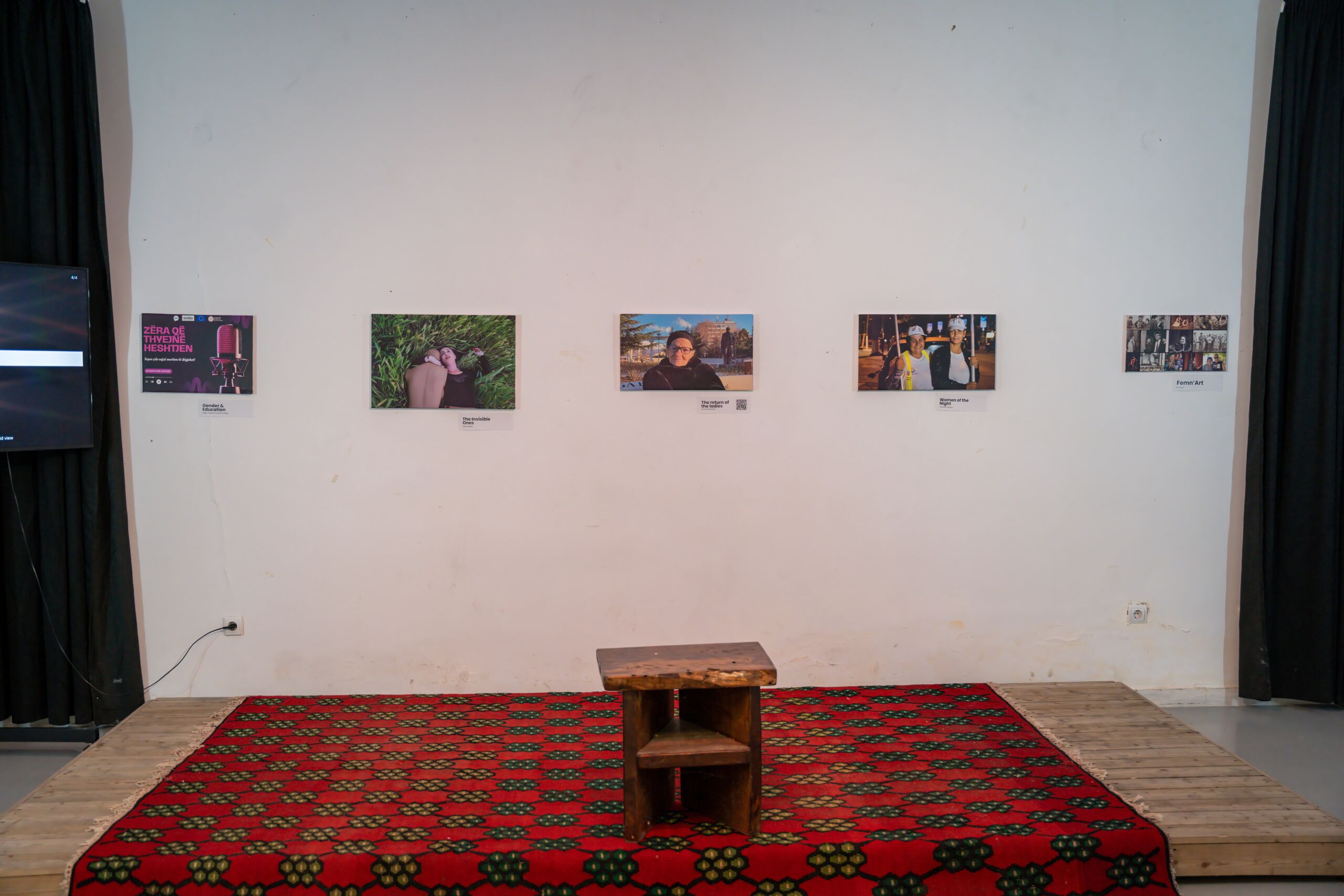
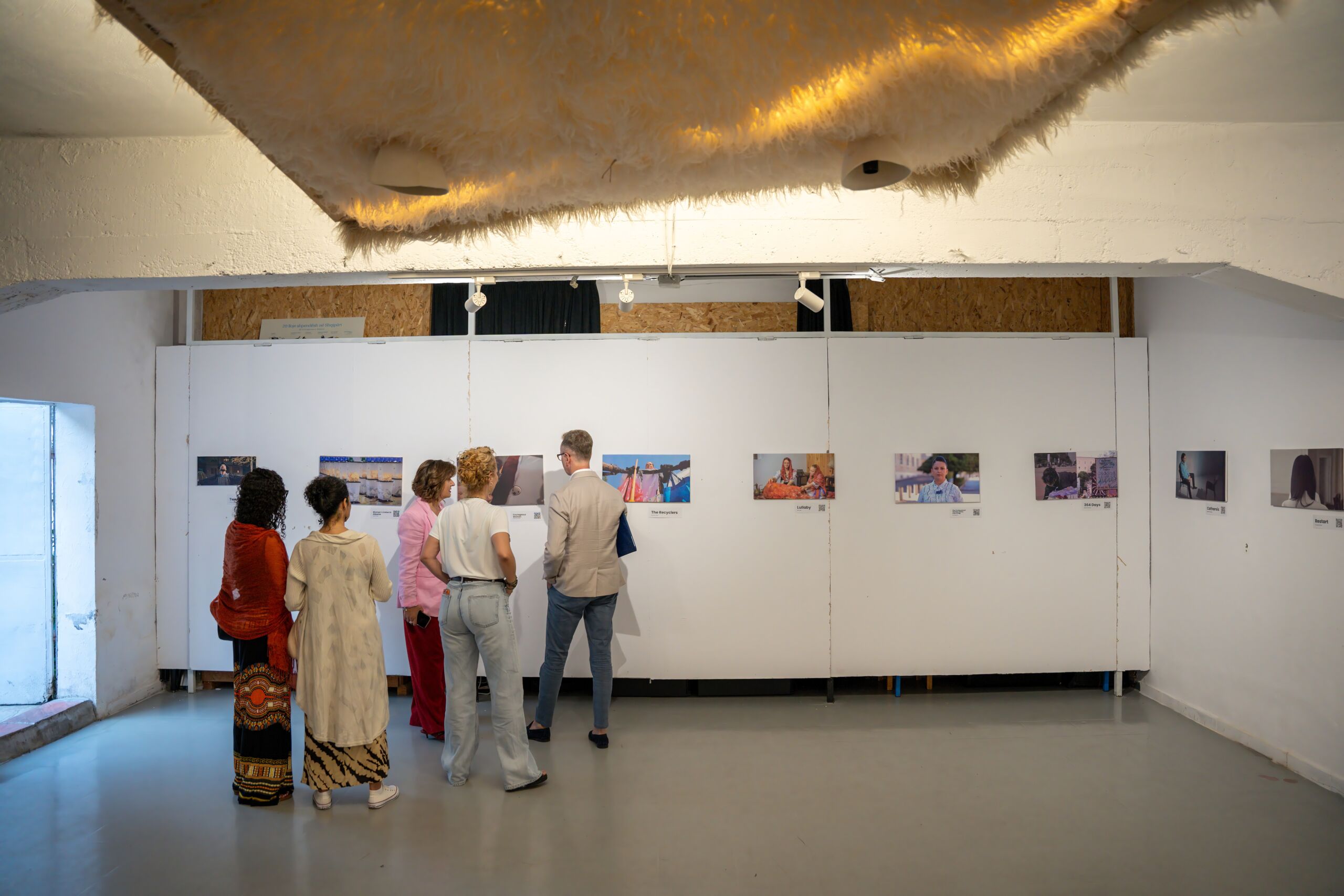
Alongside the screenings, participants were invited to explore an interactive visual storytelling exhibition featuring photographs, multimedia content, and personal testimonies from beneficiaries of the third cycle of the Mini-Grants Programme.
A special part of the exhibition was an art gallery showcasing 22 photographs created by 22 programme beneficiaries. Through their works, the artists presented reflections and diverse perspectives on identity, gender equality, community life, and social challenges. The gallery created a space for dialogue between art, journalism, and civic activism, demonstrating that stories can be told through many different forms while maintaining the same potential to inspire public debate and raise awareness.