



Albanian Women in Audiovisual (AWA)
The Network of Women in Media – Albania (NWM-A) was established in September 2024, as a joint initiative of Albanian Women in Audiovisual (AWA), Lajmëtarja, and SCiDEV. The network aims to empower and promote the role of women in the Albanian audiovisual media landscape by bringing together journalists, editors, producers, directors, and other media professionals. Through a platform for collaboration and collective action, NWM-A is committed to advancing gender equality and improving working conditions within the media sector.
Focusing on issues such as gender-sensitive reporting, leadership development, mentorship, and professional well-being, NWM-A seeks to drive a long-term transformation in both the structure and narratives of the media industry. The network also serves as a space for knowledge exchange and advocacy, aspiring toward a more inclusive and equitable media environment, particularly for women.
Currently, NWM-A has around 155 members from both traditional and digital media, as well as the broader audiovisual sector. Recently, as part of the project “Breaking the Moulds – Shaping the Future”, implemented by AWA in partnership with SCiDEV and with financial support from the European Union, a research initiative was undertaken to explore the challenges, needs, concerns, and barriers faced by women media and audiovisual professionals in Albania.
Between mid-May and mid-June 2025, AWA conducted a survey among NWM-A members to gather direct insights into women’s personal and professional experiences. The findings paint a picture of a complex and often challenging landscape for women in the Albanian media industry.
Demographics and Professional Background
The survey followed a carefully designed methodology and was distributed across several regions of the country to ensure wide geographic coverage. About 75.5% of respondents were based in Tirana, with others from Durrës, Gjirokastër, Pogradec, Shkodër, Korçë, and Elbasan.
In terms of professional roles:
42.9% identified as journalists
12.2% as editors
4.1% as producers
4.1% as freelancers
The remaining participants held diverse positions such as camera operators, editors, program directors, communication specialists, theater directors, media consultants, and communication lecturers.
Work-Life Balance and Personal Challenges
A significant section of the survey focused on balancing work with daily/personal life—a crucial dimension for women’s sustainable professional growth. Key challenges identified:
24.5% cited professional pressure as the main barrier
22.4% reported lack of flexible work hours
12.2% mentioned long working hours
10.2% highlighted family care responsibilities as an obstacle
6.1% referred to issues like chronic stress, lack of job security, and absence of health insurance
These findings reveal a combination of factors that directly impact women’s engagement and sustainability in the media and audiovisual sector.
Areas for Professional Development
When asked about their professional development needs:
34.7% wanted to gain skills in project management
22.4% were interested in artificial intelligence (AI) and its application in media
15.5% expressed interest in audiovisual production skills
14.3% sought to improve their digital and multimedia skills
4.1% emphasized safety and protection while reporting
Others cited needs related to interviewing techniques, professional writing/editing, and media project management
Barriers to Professional Growth
Regarding the key challenges they face as women professionals in media:
34.7% identified lack of funding as the most significant barrier
18.4% cited lack of institutional support
16.3% highlighted poor working conditions
16.3% pointed to difficulty balancing family and work life
8.2% mentioned lack of quality training
Others raised concerns about gender-based discrimination and lack of equal representation
Perceptions of Job Security and Work Conditions
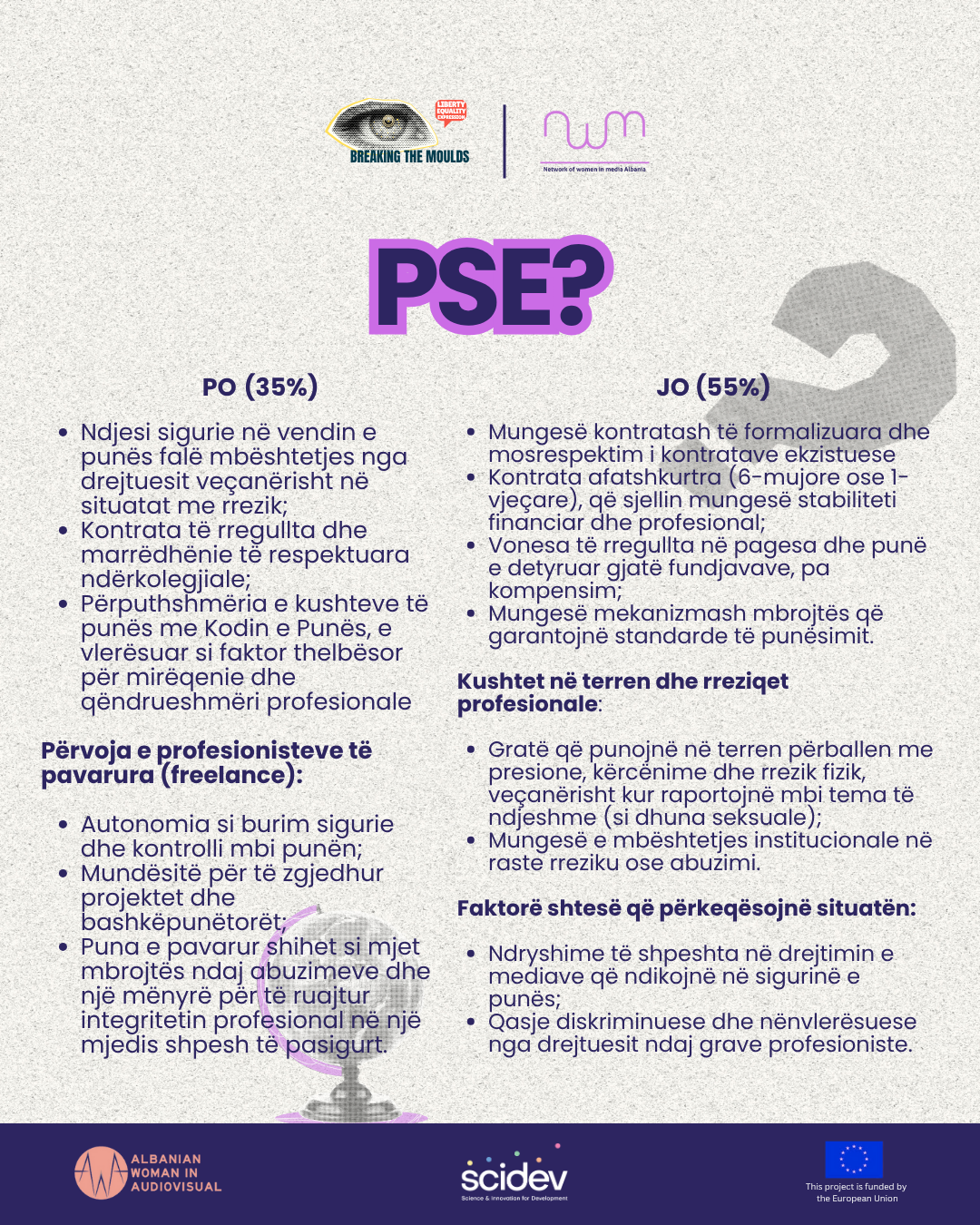
35% of participants reported positive work experiences, citing a sense of safety at work due to proactive management, formal contracts, mutual respect, and compliance with the Labor Code.
Freelance professionals emphasized the autonomy and control they experience, which reduces the risk of harassment or abuse, allowing them to choose projects and collaborators.
However, a significant 55% of participants reported feeling unsafe in their work environment. Main concerns included:
Lack of formal contracts or short-term contracts (6-12 months)
Unreliable payment schedules, uncompensated weekend work, and
Absence of protective mechanisms in case of threats or pressures
Women working in the field particularly noted physical threats and harassment, especially when covering sensitive topics like sexual violence or social issues.
Frequent changes in media leadership and sexist attitudes from managers were also reported as contributing to a sense of instability and devaluation.
Workplace Discrimination and Inequality
In response to specific challenges faced in the workplace:
36.7% highlighted pay inequality, noting they are often paid less than male colleagues for equal work
32.7% cited lack of advancement opportunities and limited access to training or mentoring
10.2% reported exclusion from decision-making processes
6.1% faced gender-based discrimination
4.1% reported sexual harassment at work
A smaller group of women media founders shared challenges such as lack of financial/institutional support, difficulty building stable teams, and gender stereotypes in management and leadership.
Professional Aspirations and Goals
Participants were invited to share their short-term professional goals, offering insight into their personal and collective ambitions. These included:
Sustainable employment in flexible or part-time media roles
Achieving economic independence
Transitioning to full-time journalism
Launching independent platforms or organizations
Pursuing international media careers
Other goals focused on improving journalistic quality, including:
Expanding knowledge of AI and emerging technologies
Adapting storytelling for younger audiences
Maintaining professional integrity
Producing original media content (e.g., documentaries or YouTube channels)
Overall, these goals reflect an effort to overcome traditional media models and build a more equitable, inclusive, and professionally sustainable environment.
Urgent Needs to Support Career Advancement
To achieve their professional goals, participants identified five key areas of need:
Training and professional development
Institutional and financial support
Networking and collaboration opportunities
Improved working conditions and safety
Legal protection and enforcement of labor laws
Preferred Forms of Support
Finally, when asked about the most effective forms of support for career progression:
40.8% emphasized the need for specialized training
40.8% valued professional networking
10.2% highlighted the importance of psychological support
8.2% expressed the need for legal assistance, particularly when facing workplace-related structural and personal challenges
These findings offer a clear overview of the current conditions, aspirations, and needs of women working in media and audiovisual in Albania — providing a strong foundation for targeted interventions and advocacy to foster a more supportive and inclusive media ecosystem.